

Introduction
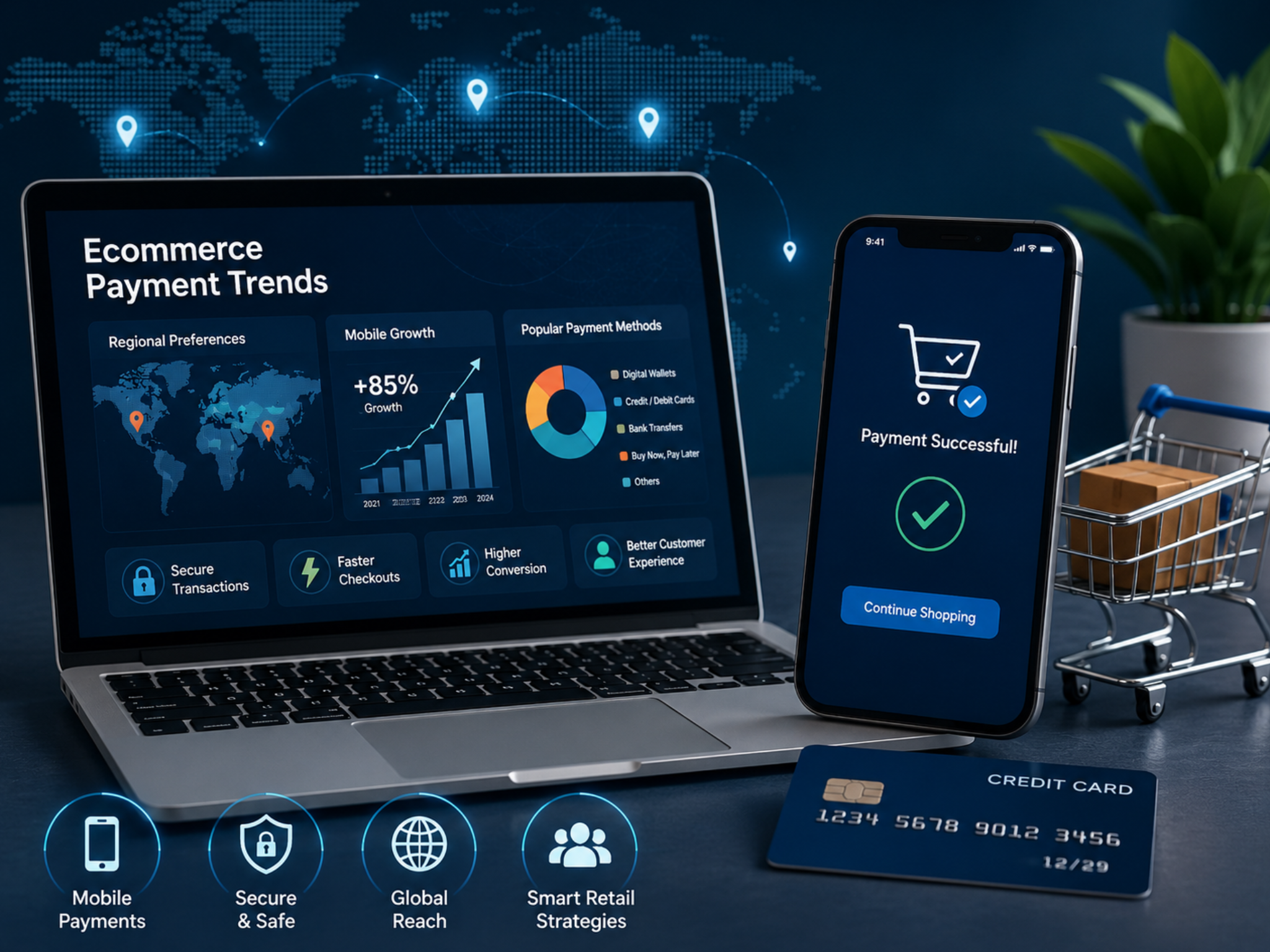
The ecommerce payment landscape is evolving rapidly as consumer expectations, regional buying habits, and mobile-first shopping continue to reshape online retail. From digital wallets and UPI payments to Buy Now, Pay Later solutions and secure card transactions, customers now expect fast, flexible, and frictionless checkout experiences across every device. Businesses that fail to adapt to these changing payment trends risk losing conversions, customer trust, and long-term growth opportunities.
Ecommerce Payment Trends
- Growing adoption of digital wallets and contactless payments
- Rising mobile commerce and smartphone-based transactions
- Increased demand for secure and fast checkout experiences
- AI-powered fraud prevention and payment security systems
- Subscription-based payment models driving recurring revenue

1. Mobile Payments Continue to Dominate Ecommerce
Mobile commerce has become one of the biggest driving forces behind the growth of ecommerce payments worldwide. With more consumers shopping through smartphones and tablets, businesses are prioritizing mobile-friendly checkout experiences that are fast, secure, and easy to use. From digital wallets to one-click payments, customers now expect seamless transactions without unnecessary steps or delays.
Retailers are increasingly integrating payment solutions such as UPI, Apple Pay, Google Pay, PayPal, and other digital wallet services to simplify the checkout process. These payment methods reduce friction, improve user convenience, and help increase conversion rates, especially among younger mobile-first audiences. A smooth mobile payment experience also minimizes cart abandonment and enhances customer satisfaction.
Modern customers expect secure, fast, and mobile-friendly payment experiences that make online shopping simple and convenient across every device.
2.Regional Payment Preferences Shape Online Shopping
Different regions across the world have unique payment habits that directly influence ecommerce success. While some countries prefer credit and debit cards, others rely heavily on digital wallets, bank transfers, or cashless mobile payment systems. Businesses that understand these regional preferences can create better checkout experiences and improve customer trust.
Modern ecommerce brands are now focusing on localized payment solutions to provide more convenience for international shoppers. Supporting multiple currencies, region-specific payment gateways, and secure transaction methods helps retailers reduce cart abandonment and increase global sales performance. By adapting to local customer behavior, businesses can build stronger connections with diverse online audiences.

3. Secure Payment Systems Build Customer Trust
Online shoppers today expect payment experiences that are not only fast but also highly secure. Ecommerce businesses are investing in advanced fraud protection, encrypted payment gateways, and secure checkout systems to protect customer information and improve transaction safety. A trusted payment environment helps businesses increase customer confidence and encourage repeat purchases.
As cyber threats continue to evolve, retailers are adopting AI-powered fraud detection and multi-layer authentication systems to reduce payment risks. Secure payment technologies also support smoother transactions across mobile devices, digital wallets, and international marketplaces. By prioritizing security and convenience together, ecommerce brands can strengthen customer loyalty and maintain long-term business growth in the competitive digital marketplace.
Modern ecommerce businesses are adopting secure and mobile-friendly payment systems to improve customer experience. Faster checkouts, digital wallets, and trusted payment gateways help increase conversions and build long-term customer trust.
4. Ecommerce SEO Helps Increase Online Visibility
Strong ecommerce SEO strategies help businesses improve their search engine rankings and attract more targeted customers online. By optimizing product pages, website speed, mobile usability, and content structure, ecommerce brands can increase organic traffic and create better shopping experiences for users.
Modern retailers are combining SEO with smart ecommerce management to improve conversions and long-term business growth. Effective keyword optimization, secure website performance, and user-friendly navigation help businesses stay competitive in the fast-growing digital marketplace while building stronger customer engagement and brand authority.

5. Smart Retail Strategies Improve Ecommerce Growth
Successful ecommerce businesses focus on customer experience, fast website performance, and efficient digital marketing strategies to stay ahead in the competitive online market. Retailers are using data-driven insights, personalized shopping experiences, and automated marketing tools to improve engagement and increase customer retention.
As ecommerce continues to evolve, businesses are investing in scalable platforms, mobile optimization, and secure payment systems to support long-term growth. Combining strong ecommerce management with SEO and modern technology helps brands attract more customers, improve conversion rates, and build a stronger online presence.
Final thoughts
Ecommerce payment trends are continuously evolving as customer expectations, mobile technology, and digital shopping behaviors continue to grow worldwide. Businesses that adapt to regional payment preferences, secure transaction systems, and mobile-friendly checkout experiences can create smoother customer journeys and improve overall conversion rates.